
A path to prevention: Why so many doctors are prescribing time in nature
January 16, 2026 | 8 min read
When you ask medical experts to list the healthy habits most likely to improve overall wellness, support longevity, and ward off chronic disease, three behaviours tend to come up: Eating well, exercising regularly, and prioritizing a good night’s sleep.
Now experts are listing another driver of long-term health: Spending time in nature.
“There’s a growing body of research published in well-respected journals that highlights the health benefits of spending extended time in nature,” explains Dr. Marie-Claude Geoffroy, the lead researcher of the Open Sky School, a collaborative project under the University of Montreal’s School of Public Health that promotes youth mental health through nature. “Physically, it’s linked to lower rates of obesity and better weight management,1 reduced risk of cardiovascular disease,2 and even longer life expectancy.3 Mentally, people tend to experience fewer symptoms of depression4 and anxiety.”5
Keep Learning: How the outdoors boosts your physical and mental well-being at any age
Stepping outside offers health benefits for every stage of life—from infancy to the senior years. Here's what the research shows.
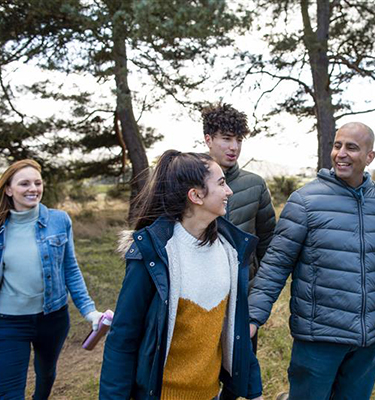
It’s so beneficial, in fact, that some doctors are now prescribing time in nature to their patients through BC Parks Foundation’s PaRx program. As of fall 2025, more than 19,000 healthcare providers have enrolled in the program, writing an estimated 1.5 million park prescriptions.
If you’ve ever felt energized after a hike in the woods, or your mood lift after taking your lunch break in a local garden, you know how terrific nature can make you feel. But what is it, exactly, about trees and bees that makes us healthier?
Health benefits of spending time in nature
According to experts, time in nature encourages healthy habits linked to wellbeing and longevity, including:
More exercise
“Being outdoors naturally encourages more movement,” Dr. Geoffroy says. Whether you’re walking, cycling, or practicing Tai Chi, the physical activity that naturally comes from being in green spaces can make you feel better now, and set the foundation for a healthier future.
- Longevity link: Regular physical activity is very strongly linked to a longer “heath span,” the duration individuals are able to enjoy a high quality of life.6
More social time
Research shows that people with strong social connections are happier, healthier, and less susceptible to chronic disease.7 Yet approximately half of Canadians report feelings of loneliness, according to Manulife data.8 Experts say that getting outside more can help bridge this gap, because nature often brings people together—whether you’re joining friends for a picnic, meeting family for a hike, or joining groups of your fellow enthusiasts to bird-watch, hike, or paint landscapes.
- Longevity link: Social connection is very strongly linked to wellbeing and longevity,9 according to primary care physician Dr. Michelle Roseman, who works with Cleveland Clinic Canada, which serves as the Medical Director for Manulife: “It is a really important complement to key lifestyle factors, like healthy eating and physical activity.”
Less stimuli
Modern urban life involves exposure to a lot of noise, air pollution, and heat—stressors that can take a physiological toll.10 Regular breaks from the hustle and bustle can give our minds and bodies a break, says Dr. Geoffroy: “It can reduce cognitive load and have a relaxing effect on our attention spans.”
- Longevity link: Treating our senses to regular breaks can help improve our overall health. Periods of quiet, for instance, can lower your blood pressure, decrease your heart rate, and steady your breathing—all of which can positively contribute to longevity.11
Less stress
Ever wonder why you feel a sense of peace in the forest? Being in nature reduces the body’s production of cortisol,12 the hormone associated with stress, Dr. Geoffroy says: “Physiologically, we’re simply less stressed in natural settings.”
- Longevity link: Managing stress can add years to your life: One Finnish study found that being under heavy stress can shorten lifespan by nearly three years.13
3 ways to add nature to your daily routine
The busy pace of modern life can make it tricky to make time for nature. The right tools can help make it a habit – and keep you accountable. Here are three ways to make it a walk in the park to take, well, a walk in the park.
1. Ask for a prescription
Healthcare providers registered with BC Parks Foundation’s PaRx program can prescribe time in nature as a remedy for patients struggling with physical and mental health issues, such as anxiety, depression, and chronic stress. Thanks to Manulife Canada’s partnership with PaRx, eligible Canadians can fulfill their prescription via free or discounted access to a range of nature spaces including national parks and select conservation areas, gardens, and conservatories.
2. Join a group
Sign up for a team or club that meets regularly for an outdoor activity, like a Tai Chi group, a field naturalist club, or an ultimate frisbee team. The costs of this may be fully or partially covered by the lifestyle spending account in your group benefits plan.
Related: Discover how Manulife Vitality can help you develop and maintain healthier habits
Check out our FAQs, hear from members and learn what makes Manulife Vitality different from traditional insurance.

3. Incentivize yourself:
A tracking tool, such as the Manulife Mobile App or the Manulife Vitality App, can make it easier to turn nature-centric activities—like quick walks through city parks or ravines—into a habit. “Vitality offers tangible rewards for healthy behaviours, like discounts or perks,” explains Elise Bourret, Global Head of Fund Services Operations at Manulife. “But the real value goes beyond material incentives. It's about feeling stronger, setting a good example for your kids, and taking pride in taking care of yourself. Those are powerful motivators.”
FAQs
Any licensed health-care provider that has opted in to BC Parks Foundation’s PaRx program can issue a nature prescription, including physicians, nurses, physiotherapists, occupational therapists, and psychologists.14 You do not need a family doctor to receive a nature prescription: Many professionals working in walk-in clinics now issue them. If you think you might benefit from a nature prescription, simply ask during your next appointment! And if your provider is unfamiliar with the program, consider telling them about it.
Start by asking! While there is no public database of participating health-care providers, the program is gaining popularity every day. Currently, PaRx is available in all 10 Canadian provinces. It is not yet available in the Northwest Territories, Nunavut, or the Yukon.
Less than you might think! While recent research suggests that consistently spending two hours per week in nature can deliver optimal health benefits,15 there’s evidence that even 40-second “micro-break” spent looking at a green roof can positively benefit mood and focus.16 Many experts recommend something in the middle: 30 minutes daily in natural light and fresh air is a good goal.17
This article is for informational purposes only. It is not intended to diagnose or treat a condition. If you have questions or concerns about your specific situation or are seeking medical advice, contact your medical doctor or your healthcare provider.
Cleveland Clinic Canada
Manulife is proud to have Cleveland Clinic Canada on board as Medical Director for our Group Benefits operations. Cleveland Clinic Canada has a wealth of global healthcare expertise and shares our goal to help Canadians live longer, healthier, and better lives. Cleveland Clinic is a nonprofit organization that has been at the forefront of modern medicine since 1921. In recent years, Cleveland Clinic has worked with progressive companies in Canada and around the world to prioritize the health and well-being of their employees, customers, and communities.
Open-Sky School
A collaborative project under the University of Montreal's School of Public Health, Manulife's funding, in alignment with our Impact Agenda supports research testing the effectiveness of a school-based intervention involving outdoor education aimed at improving health and well-being in children – i.e. testing the relationship between exposures to nature and health. Learn more.
PaRx (A Prescription for Nature)
PaRx is Canada’s national nature prescription program, an initiative of BC Parks Foundation. Learn more at parkprescriptions.ca. With Manulife’s support, more patients across Canada can gain access to free visits to select parks and conservation areas, making it easier to integrate nature into daily life.
Explore Nature with Confidence
As the Trans Canada Trail’s National Health Partner, Manulife helps enhance digital navigation tools, upgrade trail accessibility, and expand inclusive initiatives—so Canadians can find trails that fit their needs and enjoy the health benefits of nature.
Did you know? 80% of Canadians live within 30 minutes of the Trans Canada Trail.